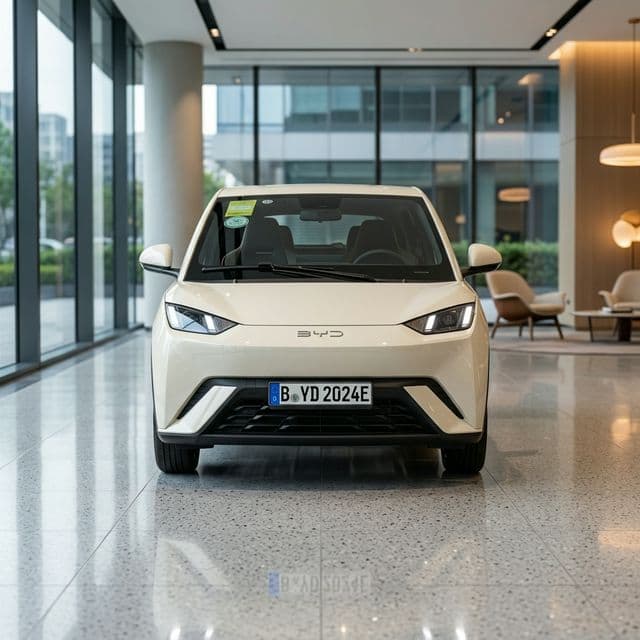
GB/T to CCS2 Charging: Adapters vs Native Retrofits for Chinese EVs
An engineering and procurement guide evaluating active adapters versus factory retrofits for Chinese Domestic Market (CDM) EVs exported globally.
When importing a Chinese Domestic Market (CDM) electric vehicle, the sticker price is only the beginning. The most critical operational hurdle global buyers face is the charging standard mismatch: China uses the GB/T standard, while Europe, the Middle East, and many other regions use CCS2.
Bridging the GB/T 27930 standard to the European CCS2 standard is not a simple matter of changing the shape of the plug. It requires complex protocol translation. This guide breaks down the engineering realities, risks, and procurement strategies for handling this conversion—specifically comparing third-party active adapters against native hardware retrofits.
Update as of June 2026: With increasing regulatory scrutiny on parallel imports in markets like the Middle East and the UK, understanding charging compliance has become a hard requirement for commercial fleet viability.
Key Conclusions for Procurement
Before diving into the engineering details, procurement teams should align on these core realities:
- Passive Adapters Do Not Work for DC Charging: You cannot use a simple piece of molded plastic and metal to connect a GB/T car to a CCS2 DC fast charger. The communication protocols are fundamentally incompatible.
- Active Adapters Carry Thermal Risks: Viable adapters must contain microprocessors to translate signals. High-power DC charging (120kW+) generates significant heat; consumer-grade adapters without active thermal kill-switches pose severe fire risks.
- Firmware is a Moving Target: Local charging networks frequently update their handshake protocols (ISO 15118). A static adapter may suddenly stop working after a station software update unless the adapter itself can be flashed.
- Homologation Dislikes Adapters: For commercial fleets (taxis, ride-hailing), local regulatory bodies often reject vehicles that rely on aftermarket adapters due to safety and liability concerns.
- Native Retrofits are the Commercial Standard: For high-volume or commercial exports, replacing the charge port and updating the Battery Management System (BMS) software natively is the only robust, long-term solution.
The Engineering Gap: CAN Bus vs. Power Line Communication
To understand why a simple adapter fails, we must look at how electric vehicles talk to chargers.
The Chinese GB/T 27930 standard dictates that the vehicle and the DC fast charger communicate via Controller Area Network (CAN bus). CAN bus is the same robust, localized network protocol used internally by almost all modern vehicles to allow microcontrollers and devices to communicate with each other.
In contrast, the CCS2 standard (used in Europe and widely adopted globally) utilizes Power Line Communication (PLC), specifically relying on protocols like DIN 70121 and ISO 15118. PLC transmits data over the control pilot pin using high-frequency signals.
When you plug a GB/T car into a CCS2 charger, they are speaking two entirely different languages over two entirely different physical transmission mediums.
An active protocol converter acts as the translator. It contains an embedded computer that reads the CAN bus signals from the car, translates them into PLC signals, and sends them to the charger, while doing the exact reverse for incoming signals. This complex handshake must happen flawlessly within milliseconds; otherwise, the charger will abort the session for safety reasons.
Comparison: Active Adapters vs. Native Hardware Retrofits
When importing vehicles, buyers generally have two paths to solve the charging issue if an official export-spec vehicle is unavailable.
| Evaluation Metric | High-End Active Adapter | Native Hardware Retrofit |
|---|---|---|
| Initial Cost | $800 - $1,500 per unit | $2,000 - $4,500 per vehicle |
| Installation Time | Zero (Plug and play) | 1 to 3 days per vehicle (Requires BMS reprogramming) |
| Thermal Risk | Medium to High (Depends on build quality; adds resistance points) | Low (Uses factory-grade wiring and cooling paths) |
| Firmware Updates | Manual (Usually via USB or Bluetooth app) | OTA or Dealer-level diagnostic tool |
| Homologation Compliance | Rarely approved for commercial fleet use | Often required for local road legality / E-Mark |
| Warranty Impact | Voids manufacturer BMS/battery warranty | Usually performed by authorized modifiers; may carry independent warranty |
| Charge Speed Limit | Typically capped at 120kW - 150kW | Matches vehicle's native maximum (e.g., 200kW+) |
Method & Boundaries: When to use which?
When to use Active Adapters: Adapters are acceptable for low-volume imports, individual buyers, or private fleets where vehicles return to a centralized depot for AC charging overnight, using DC fast charging only occasionally. If the primary use case is AC charging (which has a much simpler adapter scenario since it doesn't involve complex DC handshakes), an active DC adapter can be kept in the trunk for emergencies.
Limitation: Do not use adapters for continuous, high-power DC fast charging in extreme climates. The physical connection points create electrical resistance, generating heat. Even top-tier adapters from manufacturers like Electway or Wecent have thermal limits.
When Native Retrofits are Mandatory: If the vehicles are being deployed as taxis, ride-hailing fleets, or rental cars, native retrofits are non-negotiable. Commercial drivers cannot be expected to handle bulky, expensive ($1,000+) adapters multiple times a day. Furthermore, the risk of theft, dropping the adapter, or firmware incompatibilities causing fleet downtime makes adapters commercially unviable at scale.
Hidden Risks and Trade-offs
- The Firmware Cat-and-Mouse Game: Public charging networks frequently update their software to improve stability or implement new features. Because an adapter sits in the middle, a charger update can inadvertently break the translation logic. Fleet managers must ensure their adapter supplier provides long-term firmware support. If the manufacturer goes out of business, the adapter becomes obsolete.
- Thermal Throttling and Kill Switches: A reliable active adapter must include a thermal sensor (usually cutting off around 85°C to 90°C). When charging a high-capacity EV in a hot climate (like the Middle East), this thermal limit is reached quickly. The adapter will forcefully abort the charging session to prevent melting, leaving the driver stranded with a partially charged battery.
- Weight and Ergonomics: Active adapters contain heavy copper busbars and electronics. When attached to the already heavy liquid-cooled cable of a 150kW CCS2 charger, the combined weight puts immense mechanical stress on the vehicle's charge port. Over time, this can lead to micro-fractures in the port's mounting brackets.
Procurement Due Diligence Checklist
If you are a procurement manager evaluating a supplier's charging solution for parallel exported EVs, demand written answers to these items:
- Adapter Certification: If adapters are provided, are they CE certified? Do they explicitly support DIN 70121 and ISO 15118?
- Thermal Protection: Does the adapter have active thermal monitoring and an automatic kill-switch? At what temperature does it trigger?
- Firmware Update Mechanism: How are updates applied to the adapter? (Is there a mobile app or a USB port?) How long is the support window?
- Retrofit Authenticity: If the supplier claims "Native CCS2," is it an official OEM export-spec vehicle, or a third-party retrofit?
- BMS Software: For retrofits, how was the BMS software modified? Will a factory Over-The-Air (OTA) update wipe the modification and brick the car?
Frequently Asked Questions (FAQ)
Can I use a cheap passive adapter for DC fast charging?
No. Passive adapters only work for AC charging (where the onboard charger in the car handles the AC-to-DC conversion). For DC fast charging, the external station must communicate directly with the car's battery management system. Without a microprocessor to translate the CAN to PLC signals, the station will simply refuse to deliver power.
Will an active adapter slow down my charging speed?
Indirectly, yes. Most active adapters are rated for a maximum of 150A to 200A to manage heat. Even if the car and the charger can negotiate 250kW, the adapter's physical and thermal limits will act as a bottleneck. Furthermore, if the adapter gets hot, it will abort the session entirely rather than smoothly throttling the current like a native BMS would.
Does using an adapter void the vehicle's battery warranty?
In almost all cases involving parallel imports, the OEM factory warranty is already voided the moment the vehicle is exported out of China. However, if you are purchasing through a channel that offers a third-party warranty, using an unapproved adapter to push 150kW of DC power into the battery will typically void that secondary warranty as well.
Why don't OEMs just build all cars with CCS2?
Cost and supply chain efficiency. Vehicles built for the Chinese domestic market (which represents over 60% of global EV sales) use GB/T because it is the national mandate. Installing a CCS2 port and the necessary PLC hardware on a car destined for Beijing adds unnecessary cost. True export-spec vehicles are built on separate production lines with the correct hardware and homologation standards for their destination regions.
Securing Your Export Supply Chain
Managing the charging standard mismatch is the difference between a successful fleet deployment and a logistics disaster. While active adapters offer a stop-gap for low-volume imports, serious commercial buyers must factor in the cost of native retrofits or specifically source OEM export-spec vehicles.
Do not compare an FOB price of a GB/T domestic vehicle against a CCS2 export vehicle without factoring in the $1,000+ per vehicle adapter cost or the $3,000+ retrofit cost—plus the associated operational risks.
Need clarity on your sourcing strategy? If you are planning a commercial import and need to guarantee charging compatibility and compliance in your destination market, we can help. Our team verifies whether a specific model has a stable native CCS2 export version available, or if you are better off looking at alternative models.
Send your project requirements to [email protected] to start a verified sourcing discussion.
Sources & Verification Context:
- ISO/IEC Directives: ISO 15118 (Vehicle-to-Grid Communication Interface) specifications regarding Power Line Communication (PLC).
- GB/T Standards: GB/T 27930 (Communication protocol between off-board conductive charger and battery management system for electric vehicle) mandates CAN bus communication.
- Technical Analysis of EV Charging Adapters: Industry testing data from active protocol converter manufacturers (e.g., Electway, Wecent) detailing thermal cutoff limits and microprocessor requirements.
- Homologation and Fleet Compliance: European E-Mark certification guidelines regarding aftermarket high-voltage modifications.
- Supply Chain Pricing: Market aggregate pricing for commercial-grade active adapters and native third-party retrofits as of Q2 2026.
Author

Categories
More Posts

China EV Export W30: EU PHEV Tariffs & Red Sea Escalation
China EV export market update for 2026-W30: EU PHEV tariff risk, Houthi Saudi embargo routing, COSCO RoRo turnback, and Australia RAV motive-power checks.
China EV Export Market Update (2026-W15): Jebel Ali Service Pullback, UK eCoC Clock, and Panama D-4 Discipline
Decision-grade weekly update for importers and fleet buyers: Gulf lane service redesign, UK eCoC manufacturing-date cut line, Australia ADR 79/05 evidence gates, and Panama booking discipline.
Region Locks and OTA Updates: Software Risks of Parallel Importing Chinese EVs
Procurement guide to software localization, region locks, ADAS geofencing, and OTA risks in parallel-imported Chinese EVs.